
Cabinets That Look Replaced Without Replacement Cost
Cabinet refinishing in Vernonia for kitchen and bathroom cabinets with worn, peeling, or discolored finishes
Cabinet refinishing is the process of stripping the existing finish, preparing the bare wood surface, and applying new paint or stain with a sealed topcoat—producing results that are visually indistinguishable from new cabinetry at a fraction of the cost and disruption of full replacement. Caballero General Construction, LLC has built cabinet refinishing into the core of its service offering, with 17 years in the trade and a process that treats finish adhesion as a technical result of surface preparation rather than a matter of applying enough product. Homeowners in Vernonia whose kitchen and bathroom cabinets have accumulated wear, moisture damage, or peeling finish typically find that refinishing restores the surface without the lead time and installation disruption that cabinet replacement requires.
Each project follows a defined sequence: cabinet surfaces are sanded to open the grain and remove the old finish, primer is applied, and paint or stain is chosen by the client and applied in finish coats, with a protective sealer on top. Hardware is reset after the finish cures. The full job runs five to seven days, which is the time required to allow each coat to cure properly before the next is applied. Rushing the cure sequence between coats is one of the most common reasons refinished cabinets fail within a year—the finish looks complete but hasn't bonded fully to the layers below. Price includes surface prep, paint or stain, hardware installation, and sealing; clients remove items from cabinets and provide kitchen access for the duration.
To get a clear scope of what your cabinets need and which finish options are appropriate for your wood type, schedule an on-site review with Caballero General Construction, LLC..
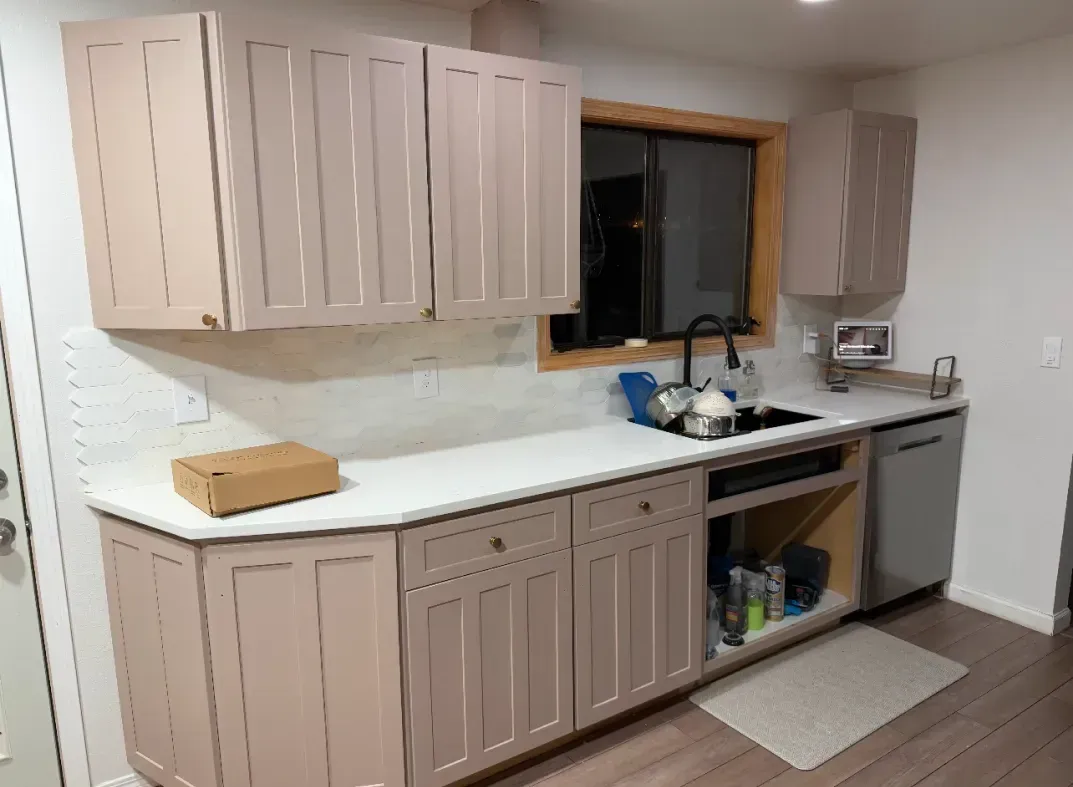
The Difference Between a Lasting Finish and an Early Failure
Sanding cabinet surfaces before primer application does two things: it removes the existing finish that would prevent adhesion, and it opens the grain of the wood so the primer can penetrate rather than sitting on the surface. On cabinets with factory-applied finishes, which are common in homes built since the 1990s, the original coating is often a conversion varnish or catalyzed lacquer that requires more aggressive sanding than a previously painted surface. Identifying which type of finish is present before starting determines how the prep is sequenced and what primer is appropriate.
When the work is finished, cabinet doors and frames will open and close without the sticky drag that develops when paint is applied without proper surface prep, and the finish will hold at edges and corners where wear typically shows first. The sealed topcoat creates a wipeable surface that handles moisture from cooking and cleaning without lifting or clouding. Caballero General Construction, LLC backs all cabinet refinishing with a two-year warranty and no-cost callbacks if the finish develops any adhesion failure.
Cabinet refinishing works best on structurally sound cabinet boxes and doors. If hinges are failing, drawer slides are broken, or the cabinet box itself has water damage to the substrate, those issues should be addressed before refinishing begins—applying a new finish over a damaged structure doesn't repair the underlying problem and shortens the life of the new finish. The initial assessment covers both the finish condition and the structural condition of the cabinets before work is scoped.
Questions About How Cabinet Refinishing Is Performed
The following questions address the specific steps involved in cabinet refinishing, how material and finish decisions are made, and what the completed work should look like—useful for homeowners in Vernonia evaluating whether refinishing is the right approach for their cabinets.
How is sanding done differently on cabinets versus walls?
Cabinet sanding requires careful attention to edge profiles and recessed panel details where a sander can't reach, so hand sanding with the grain is used in those areas to avoid cutting through the wood veneer. On flat door faces, orbital sanding removes the old finish efficiently, but the grit sequence matters—finishing with too coarse a grit leaves scratches that telegraph through the primer and final coat.
What type of sealer is applied over the finish coat on cabinets?
A clear polyurethane or water-based topcoat is applied over the final paint or stain layer to create a hard, washable surface that resists moisture and cleaning products. The sealer is what separates a durable cabinet finish from a wall paint application—without it, the paint layer wears through at edges and high-contact areas within a year.
Why does cabinet refinishing take five to seven days rather than one or two?
Each coat—primer, paint or stain, sealer—requires a full cure period before the next can be applied. Applying the next coat before the previous one has cured traps solvents in the film and prevents proper adhesion between layers, which is the most common cause of peeling in refinished cabinets. The timeline reflects the chemistry of the products, not the pace of the work.
What should cabinets look like once refinishing is complete?
Doors and drawer faces should show a consistent, uniform finish with no brush marks, sanding scratches, or thin spots at edges and corners. Hardware should be seated flush with no paint bleed onto hinges or pulls, and the surface should feel smooth and hard to the touch rather than tacky or slightly soft.
How does the existing finish type affect what prep is required?
Factory finishes, particularly conversion varnishes and catalyzed lacquers common in Vernonia homes built from the 1980s onward, require more aggressive abrasion than previously painted surfaces because they're designed to resist exactly the kind of adhesion that refinishing needs to establish. Identifying the existing finish type before starting is essential to choosing the right primer and sanding approach.
Caballero General Construction, LLC is a family-owned, licensed, and insured contractor specializing in cabinet refinishing, with a two-year warranty on all finish work. Caballero General Construction, LLC also performs cabinet refinishing in Hillsboro, Beaverton, Portland, Tigard, and Lake Oswego. Call (971) 344-4646 to schedule an assessment of your cabinets and review finish options before the project begins.