
Structural Repairs That Make a Deck Safe Again
Deck repair in Vernonia for rot, loose boards, failed fasteners, and compromised framing
Wood rot, nail pop, and finish failure do not stay contained. Once moisture penetrates deck boards or framing members without a functioning barrier, the degradation moves laterally into adjacent material—what starts as a soft spot in one board often reflects underlying framing damage that is not visible from above. Caballero General Construction, LLC handles deck repair in Vernonia by addressing structural integrity first, before any surface finishing work begins. That sequence matters because refinishing over a structurally compromised deck conceals the problem without correcting it.
The crew inspects the entire deck—not just the sections that are visibly damaged—checking for rot in boards and framing members, loose or corroded fasteners, compromised ledger connections, and any areas where the structure has shifted from its original position. Damaged sections are replaced, fasteners are reset or upgraded to corrosion-resistant hardware where appropriate, and the surface is prepared for staining or painting once the structural work is complete. All repairs are made to meet safety standards before finishing begins. The licensed and insured crew carries 17 years of hands-on trade experience, which affects how quickly hidden damage gets identified during the inspection phase.
Schedule a deck inspection to determine the extent of the damage and what the repair scope will involve before any work begins..
What Deck Repair Prevents Long-Term
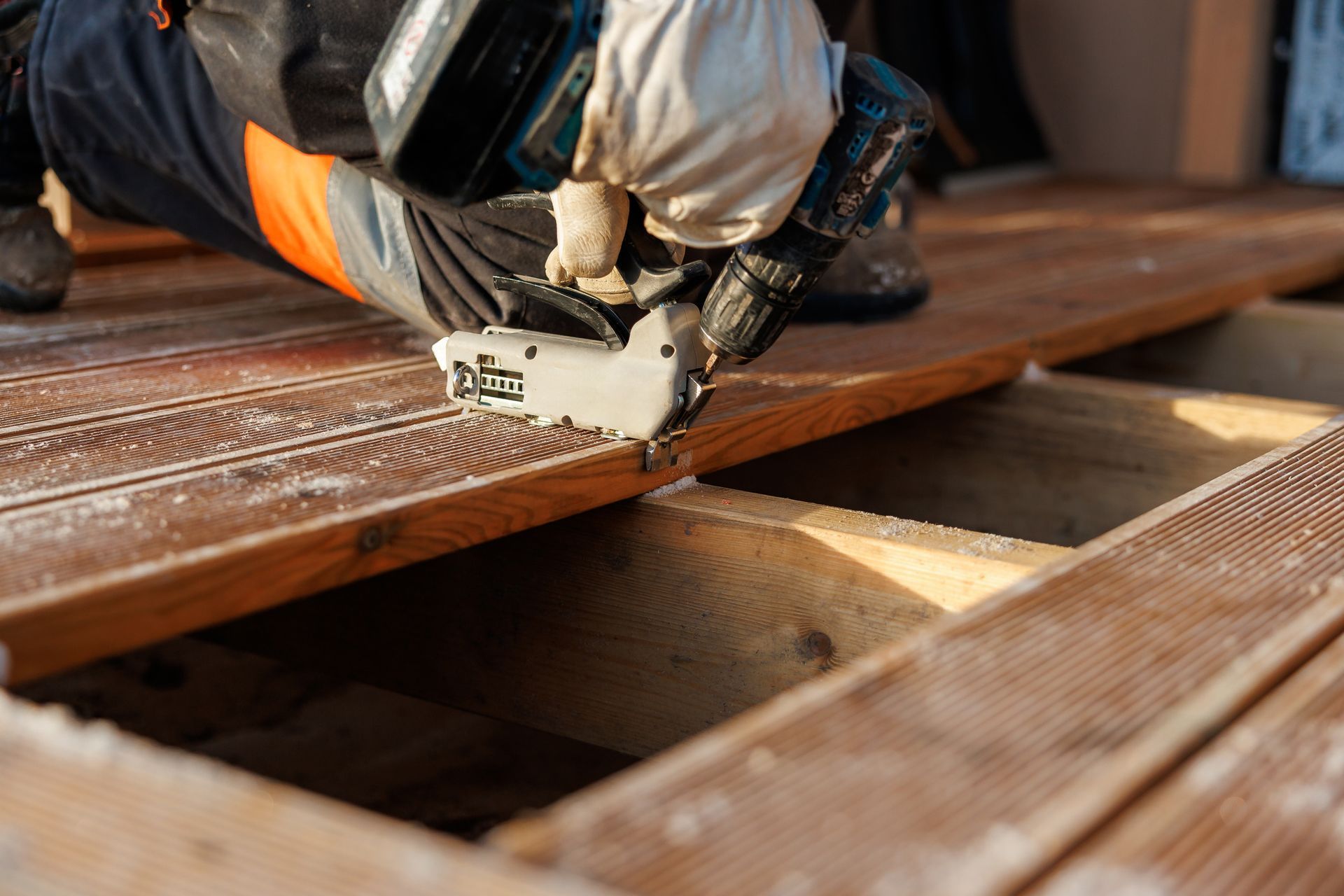
The distinction between a repair done correctly and one done quickly shows up in the fasteners. Replacing rotted boards with the same nail-driven fasteners that failed is a common shortcut—corrosion-resistant screws driven at proper torque into sound framing hold significantly longer and do not pop above the surface as the wood cycles. Caballero General Construction, LLC selects fastener type and placement based on what the framing and board material can support, not simply what was there before.
After repair work is completed and the surface has been stained or painted, the deck should feel solid underfoot with no flex in areas that previously felt soft or unstable, no visible fastener heads sitting above the board surface, and consistent color across both the repaired sections and the original material. In Vernonia, where residential decks frequently include older pressure-treated lumber that was installed before corrosion-resistant fasteners became standard, the fastener upgrade alone changes how the deck behaves over the next several years.
The two-year warranty covers all repair work with no-cost callbacks if any repaired section fails within that period. Work is assessed and scoped on site, which means the repair plan reflects the actual condition of the deck rather than a general estimate made without seeing the structure.
Common Questions About This Service
The questions below address how deck repair is assessed and completed, what decisions get made during the inspection, and what you will notice once the work is done.
How does the crew identify rot that is not visible from the surface?
Probing with a pick or screwdriver at the ends of boards and into framing connections reveals soft spots where wood fiber has broken down below the surface layer. Boards that look intact from the top can be hollow or punky underneath, and framing members attached to the ledger are particularly prone to holding moisture from two sides simultaneously.
What happens when rot extends into the framing rather than just the deck boards?
Framing damage changes the scope of the repair—affected joists or beams need to be sistered or replaced before new decking is installed, because surface boards screwed into compromised framing will not hold correctly and create a safety risk that a surface-only repair cannot address.
Why are fasteners replaced or upgraded during a deck repair rather than reused?
Existing fasteners in older Vernonia-area decks are frequently plain-steel nails that have corroded at the shank, which is what causes them to pop above the board surface as the wood moves. Corrosion-resistant screws driven into the board at the correct angle hold the material flat and do not loosen as the wood expands and contracts with moisture changes.
How is the repaired deck prepared for staining or painting after structural work is complete?
Once all damaged material has been replaced and fasteners are set, the surface is cleaned and prepped to accept finish—this includes addressing any raised grain on new lumber and ensuring the new boards are dry enough for the stain or paint to bond. New wood typically requires additional drying time before it can be finished correctly.
What should you check periodically to catch deck damage before it becomes a major repair?
Board ends at the perimeter, areas around post bases where water can pool, and the ledger connection at the house are the three locations where deterioration typically begins. Finish failure in those spots—visible as graying, flaking, or soft texture—is an early indicator that moisture has started penetrating the wood.
Caballero General Construction, LLC also performs
deck repair in Lake Oswego, Hillsboro, Beaverton, Portland, Tigard. To get a clear assessment of what your deck needs, call (971) 344-4646 to arrange an on-site inspection with the crew.