
Patches and Cracks Fixed to a Seamless Surface
Drywall repair in Vernonia for holes, cracks, and surface damage that make painting difficult or visible
A patched wall that reads as a patch under paint is almost always the result of inadequate surface preparation rather than a product failure. Caballero General Construction, LLC patches holes, repairs cracks, sands surfaces smooth, and primes everything ready for paint—work that is delivered to a standard where the repair zone is indistinguishable from the surrounding wall. In Vernonia's mix of older and newer residential stock, cracks from settling and holes from daily wear show up regularly, and poor repair work compounds the problem by leaving ridges and texture mismatches that make subsequent painting difficult regardless of how good the paint job itself is.
The repair sequence starts with an assessment of what the damage actually involves—whether a hole requires backing support before patching, whether a crack is surface-only or reflects movement in the substrate, and whether the surrounding wall texture needs to be matched after the repair is sanded smooth. Holes are patched with compound, cracks are reinforced with mesh tape and mud, and all repairs are sanded flush before priming. Small repairs are handled the same day or the next; larger damage requiring multiple compound coats to build out to wall thickness may take additional visits to allow proper drying between applications. Price includes materials and labor; clients provide access.
To get a direct look at what your wall damage involves and how it will be approached, schedule an assessment with Caballero General Construction, LLC before any painting work begins..
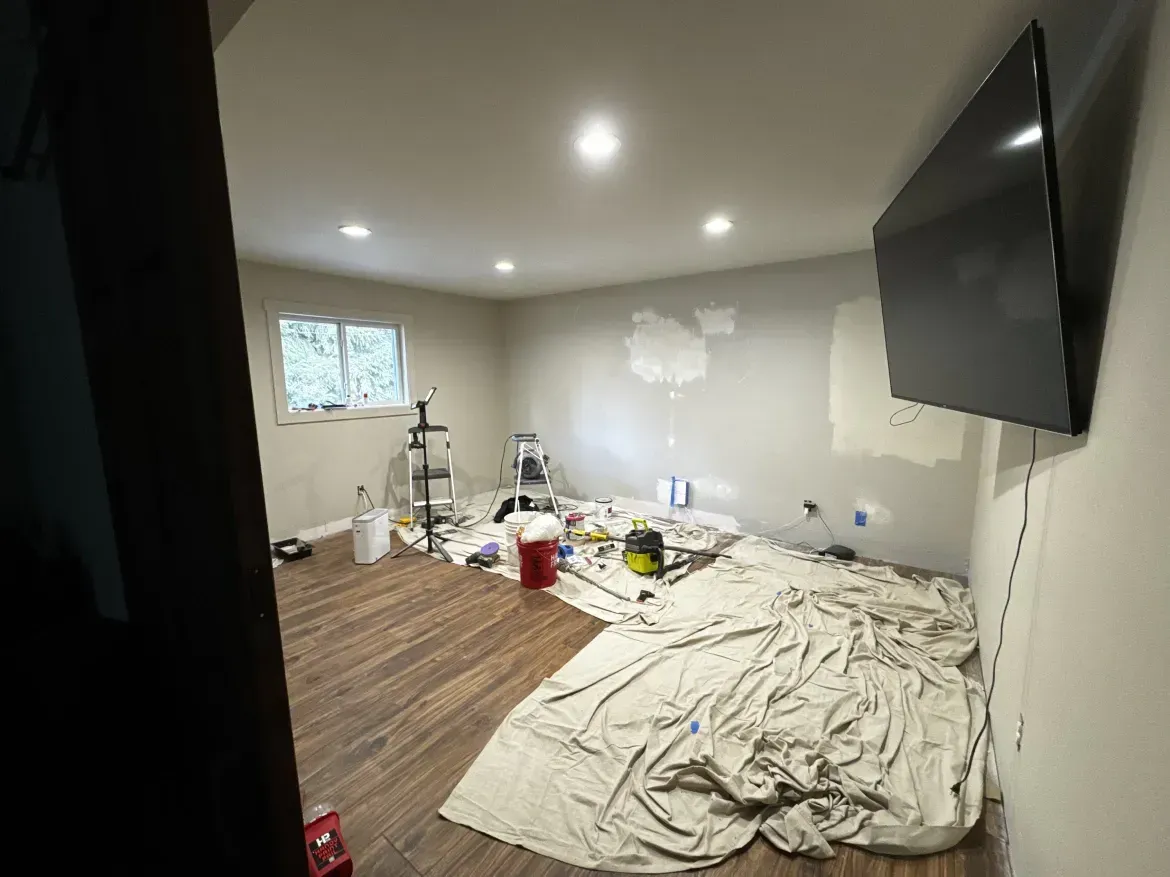
How Drywall Repair Is Done Correctly
Crack repair requires a different approach than hole patching because cracks typically indicate movement in the substrate rather than a simple surface defect. Applying compound directly into a crack without embedding mesh tape produces a repair that re-cracks at the same location within a few months as the wall continues to move. Mesh tape bridges the crack and distributes the stress across the repair area, which is what keeps the compound from fracturing along the original line. On older Vernonia homes where wall settling has produced long diagonal cracks at door corners and window frames, this distinction is especially important because those areas are subject to repeated stress.
Once repairs are complete and primed, the wall surface should read flat and consistent under light from any angle, with no raised edges, dimples, or texture variation where the patch meets the original wall. In areas where texture matching is required—popcorn, orange peel, or skip trowel patterns common in homes built between the 1970s and 1990s—the repair is textured to match before priming so the finish coat covers it uniformly. Caballero General Construction, LLC backs all drywall repair with a two-year warranty and no-cost callbacks if any repair fails.
The approach to a repair changes based on the size and depth of the damage. Holes smaller than roughly six inches can typically be patched with a backing patch and compound without cutting in new drywall. Larger holes or areas with damage that extends through the full sheet thickness may require cutting to the nearest stud, installing a backing board, and hanging a new piece of drywall before the seam work begins—a process that falls into
installation territory rather than simple patching. The initial assessment determines which category the damage falls into before any work begins.
What to Know Before Drywall Repair Work Starts
The questions below address the specifics of how drywall repair is performed, what determines the approach for different types of damage, and what the finished repair should look like—relevant for homeowners in Vernonia dealing with holes, cracks, or surface damage ahead of a painting project.
Why does crack repair require mesh tape rather than compound alone?
Mesh tape reinforces the repair across the width of the crack so that when the wall moves—as it does in any home that experiences normal settling—the compound doesn't fracture along the original line. Compound alone has no tensile strength and will crack again at the same location without a reinforcing layer underneath it.
How is a hole repaired when there is no stud or backing behind it?
Holes without backing require either a California patch—where a piece of drywall larger than the hole is scored and folded to create a built-in backer—or a metal clip or backer board fastened behind the existing drywall to give the patch something to bond to. Without backing, the compound has nothing to support it and will flex and crack under any surface pressure.
What does the repair look like after each stage is complete?
After the initial coat, the repair will be slightly higher than the surrounding surface and will show the tape or patch material underneath. After sanding and a second coat, the edges feather out gradually so the transition becomes invisible. The final sanded and primed surface should sit flush with the surrounding wall with no raised perimeter line when you drag a straightedge across it.
How is texture matched after a drywall repair in homes with existing wall texture?
Texture matching is applied by hand or with a spray texture tool after the compound is sanded smooth, using the same pattern—skip trowel, orange peel, or knockdown—present on the surrounding wall. In Vernonia homes built in the 1970s through 1990s, skip trowel and orange peel textures are common, and matching them requires working wet to match the pattern size and depth before the compound sets.
When does a repair require multiple visits rather than being completed in one day?
Repairs that require building up compound in layers to fill deep holes or level significantly damaged surfaces need time between coats for the compound to dry and shrink before the next layer is applied. Applying compound too thickly in a single coat causes cracking as it dries and produces a surface that sinks below the wall face rather than finishing flush with it.
Caballero General Construction, LLC is a family-owned, licensed, and insured contractor with 17 years in the trade, delivering drywall repair that is finished to paint-ready standard with a two-year warranty on all work. Caballero General Construction, LLC also performs
drywall repair in Portland, Hillsboro, Beaverton, Tigard, and Lake Oswego. Call (971) 344-4646 to set up an assessment of your wall damage before your next painting project begins.