
Finishes That Hold Up Under Regular Foot Traffic
Deck staining in Vernonia for surfaces showing fading, graying, or uneven finish loss
Caballero General Construction, LLC handles deck staining in Vernonia for homeowners whose decks have lost their protective finish and are showing the early signs of wood degradation. A grayed, chalky, or blotchy surface is not just a cosmetic issue—it means the wood is absorbing moisture without any barrier in place. Surface prep, stain application, and sealing are all included in the scope of work, so the deck is fully protected when the job is complete.
The process begins with surface preparation, which determines how well the finish bonds and how long it lasts. That means cleaning the deck thoroughly, addressing any raised grain or surface contamination, and confirming the wood is in condition to accept stain before any product goes down. After staining and sealing are complete, the deck needs to stay dry for 48 hours—a step that directly affects how the finish cures and bonds to the surface. Customers clear the deck before the crew arrives so work can proceed without interruption.
Request a project assessment to review the current condition of your deck and determine the right stain and prep approach for your specific surface.
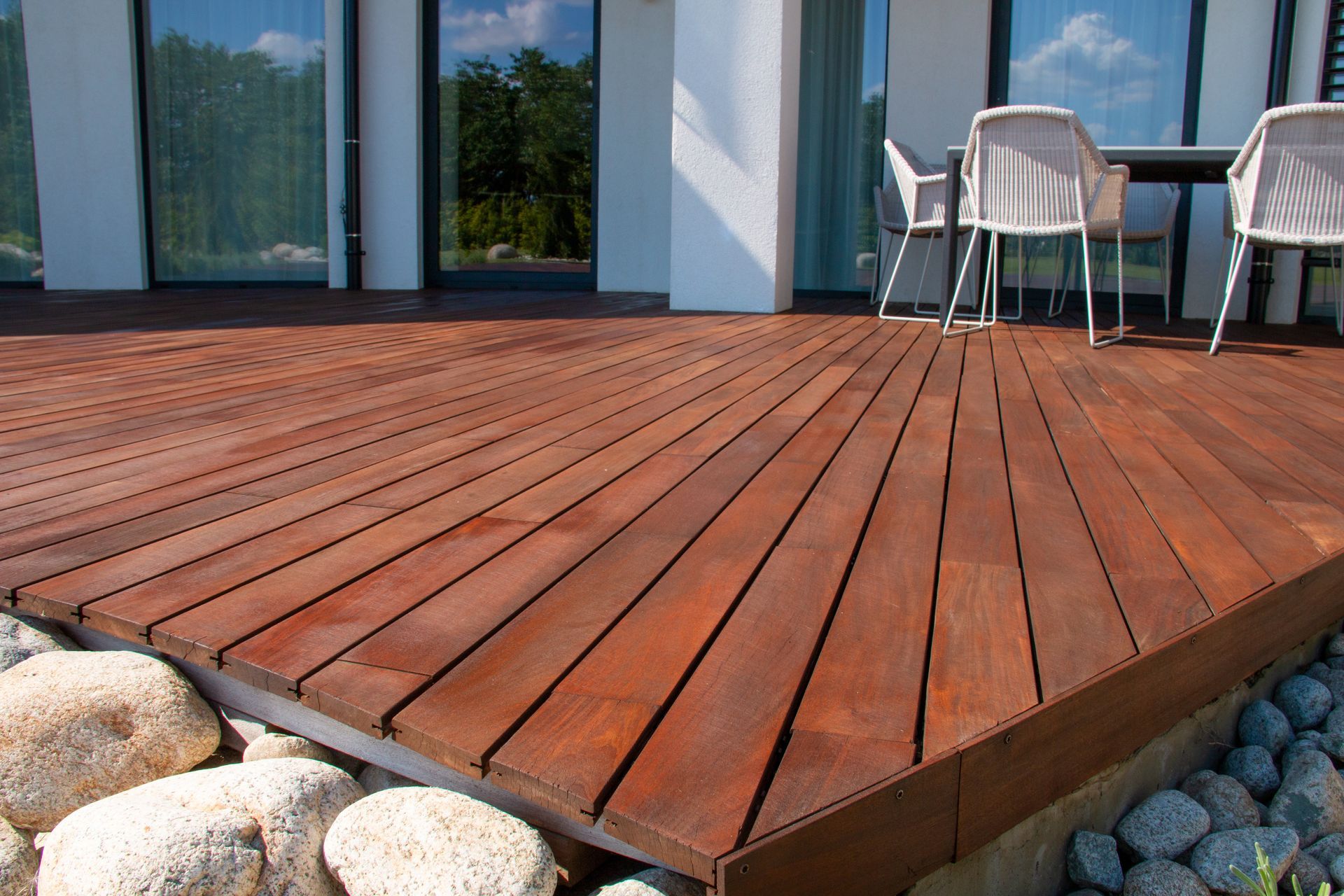
What Proper Deck Staining Actually Requires
Not every deck takes the same prep sequence. Older wood that has been previously stained may need stripping before new product can penetrate correctly, while bare or weathered wood typically needs cleaning and light sanding to open the grain. Skipping or shortening the prep phase is the most common reason a stain job looks uneven or peels within a season—the product sits on top of the surface instead of bonding into the wood fiber.
Once staining and sealing are finished, you will notice an immediate change in how the surface looks and feels—consistent color, no dry or chalky patches, and a surface that sheds water rather than absorbing it. Caballero General Construction, LLC backs all staining work with a two-year warranty and no-cost callbacks if the finish fails before that window closes, which means the quality of the application is something the company stands behind directly.
Solid and semi-transparent stains each behave differently on aged wood versus newer lumber, and the right choice depends on how much grain visibility you want to preserve versus how much coverage the wood actually needs. Decks with significant graying or grain damage typically benefit from a more opaque product that masks the degraded surface while still protecting it. That selection gets made during the prep assessment, not after the product is already applied.
Answers About How the Deck Staining Work Is Done
The questions below address the staining process itself—what happens during the work, what decisions get made on site, and what you should expect once the job is finished.
What does surface preparation involve before staining begins?
The deck is cleaned to remove dirt, mold, mildew, and any residue from previous finishes, and the wood surface is checked for raised fasteners, splinters, or contamination that would prevent the stain from bonding evenly. In Vernonia, decks on older residential properties sometimes have layered finishes from multiple previous applications, which affects whether stripping is required before new stain can be applied correctly.
How does the choice between solid and semi-transparent stain affect the finished result?
Solid stains provide more coverage and conceal surface imperfections in weathered or gray wood, while semi-transparent stains allow grain visibility but require the wood to be in reasonably sound condition for the finish to look uniform. The condition of your specific deck surface drives that decision.
What has to happen after staining is complete for the finish to cure properly?
The deck must stay dry for 48 hours after the work is done, which allows the stain and sealer to bond fully into the wood fibers. Foot traffic or moisture exposure during that window can interrupt the curing process and affect how long the finish holds.
Why does stain sometimes peel or fade unevenly within a year of application?
Premature failure almost always traces back to insufficient surface prep—either the wood was not clean enough, moisture content was too high at application, or a previous finish layer was not fully removed. A properly prepped surface allows the stain to penetrate rather than sit on top, which is what produces a finish that holds through normal use.
What should you look for in a finished deck staining job to confirm the work was done correctly?
Consistent color across the entire surface, no lap marks or blotchy areas where stain pooled, and water beading on the surface rather than soaking in are the three visible indicators that both the prep and application were done correctly.
Caballero General Construction, LLC also performs
deck staining in Tigard, Hillsboro, Beaverton, Portland, and Lake Oswego. To get a clear picture of what your deck needs and what the finished result will look like, schedule an on-site review with the crew directly at (971) 344-4646.