
Surfaces Cleaned Without Damage to the Underlying Material
Pressure washing in Vernonia for siding, decks, driveways, and surfaces before painting or staining
Many painted and stained surfaces fail not because of poor product selection but because the surface underneath was not clean when the finish went down. Caballero General Construction, LLC provides pressure washing in Vernonia for homeowners preparing for a paint or stain project, as well as for those who want to refresh exterior surfaces without a full refinishing job. The crew uses pressure settings and nozzle configurations matched to the material being cleaned—wood, composite decking, concrete, and painted finishes each respond differently to water pressure, and using the wrong setting causes damage that cannot be undone.
The process starts with a surface assessment to identify the material type, its current condition, and how much contamination is present. Mold, mildew, layered dirt, and weathered finish residue are removed without stripping sound material underneath. When pressure washing is being done ahead of painting or staining, this step determines whether the subsequent coating will adhere correctly—a surface that looks clean to the eye but still carries mold spores or chalky residue will cause a new finish to fail faster than expected. Cleanup is included when the work wraps up.
Arrange a surface evaluation to confirm what prep your exterior requires before the next phase of work begins.
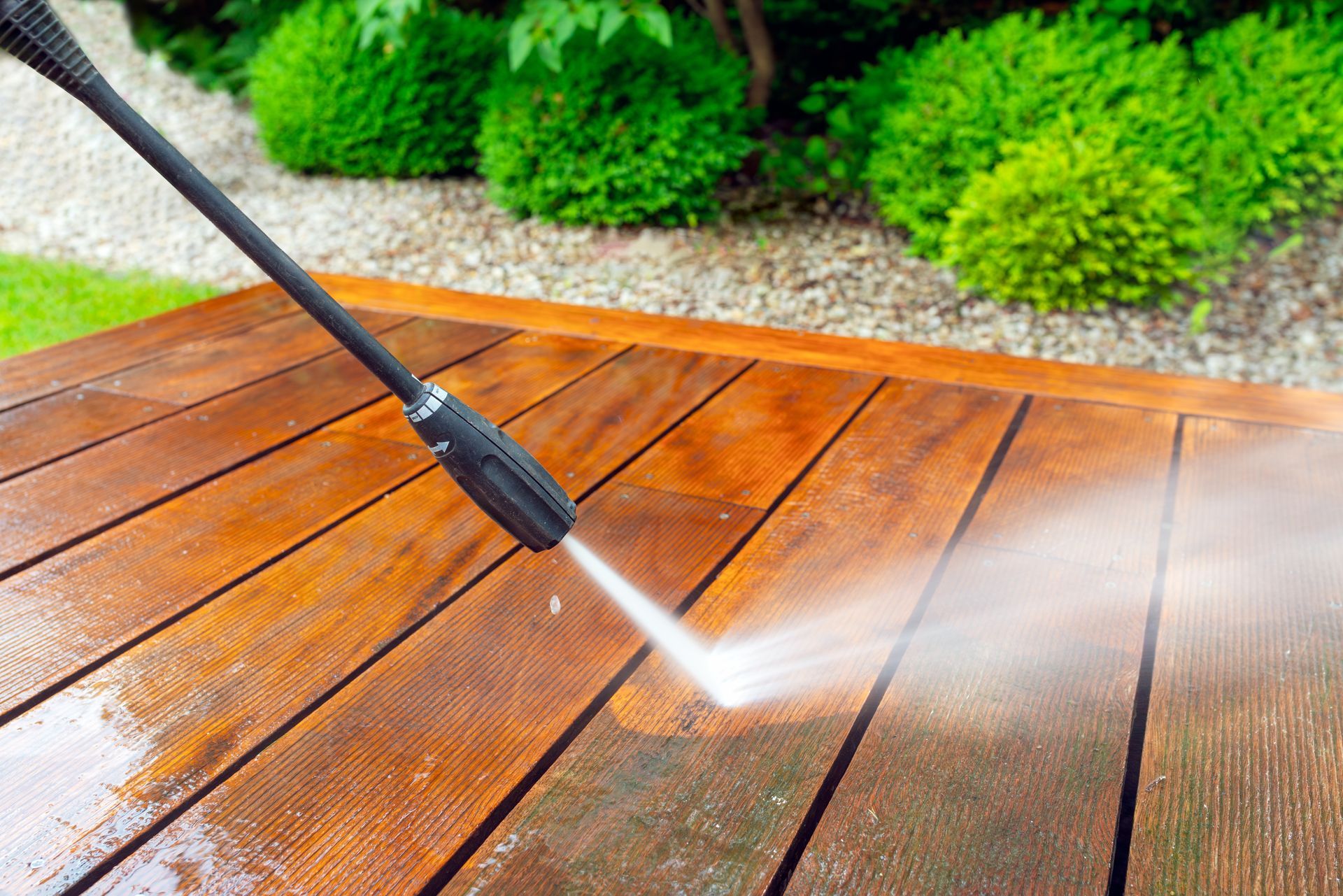
How Pressure Washing Addresses Contamination Without Causing New Damage
The difference between pressure washing done correctly and pressure washing that leaves behind damage comes down to two variables: pressure level and nozzle angle. A wide-angle nozzle at lower pressure cleans wood siding and deck boards without raising the grain or driving water into joints; a narrow high-pressure setting suitable for concrete can split wood fibers and strip paint from surfaces that were not meant to be stripped. The crew at Caballero General Construction, LLC evaluates each surface type before selecting settings, which protects materials that would otherwise be compromised by an incorrect approach.
After pressure washing is complete, surfaces will show consistent, even color without the dark staining from mold colonies or the chalky residue of weathered finishes. On surfaces being prepared for painting or staining, the visible difference also reflects a functional change—paint and stain bond to a properly cleaned surface at the molecular level rather than adhering to contamination that will eventually let go. On standalone refresh jobs, the finished exterior simply looks maintained rather than neglected.
Pressure washing is licensed and insured work covered by a two-year warranty, with no-cost callbacks if any issue develops within that window. Whether the job is a pre-paint prep for older wood siding or a driveway refresh, the scope is assessed on site so the right approach is applied to each specific surface rather than a single default method.
What Property Owners Ask About the Work
The questions below focus on how pressure washing is performed, what decisions get made during the job, and what to expect once the work is finished.
How does the crew determine the correct pressure setting for a specific surface?
The material type and its current condition are evaluated before any equipment is adjusted—wood requires significantly lower pressure than concrete, and painted surfaces need a setting that removes contamination without stripping the underlying coat. Selecting the wrong setting causes surface damage that cannot be repaired without refinishing.
What does pressure washing actually remove from a surface?
The process removes mold, mildew, accumulated dirt, algae growth, and weathered or chalky finish residue that has separated from the surface. What remains after washing is the sound underlying material, ready for inspection or for a new coat of paint or stain.
Why is pressure washing done before painting or staining rather than after?
Paint and stain bond to the surface material itself, not to the contamination layer sitting on top of it. Applying finish over mold, chalky residue, or dirt creates a bond failure point where the new coat will eventually separate from whatever it was actually adhering to. In Vernonia, where residential properties often include older wood siding and deck structures, that contamination layer can be substantial and must be fully cleared before refinishing begins.
What should a freshly pressure-washed surface look like when the work is done correctly?
Color should be consistent across the entire area, with no dark patches from mold colonies, no streaking from uneven passes, and no surface damage like raised grain on wood or pitting on painted finishes. Uneven results typically indicate pressure settings or nozzle angles were not adjusted for the specific surface.
How does the condition of composite decking affect the pressure washing approach differently than wood?
Composite materials are more sensitive to high-pressure passes at close range, which can leave permanent track marks in the surface. The crew uses wider angles and moderate pressure on composite decking to clean thoroughly without altering the factory finish or creating texture inconsistencies.
Caballero General Construction, LLC also performs pressure washing in Hillsboro, Beaverton, Portland, Tigard, and Lake Oswego. To confirm the right cleaning method for your specific surfaces, call (971) 344-4646 and speak directly with the crew about what the job involves.